


- Home
- Press releases
- News
- A new cruise model is born in Venice, combining commerce with sustainability
A new cruise model is born in Venice, combining commerce with sustainability
Special Commissioner Di Blasio: “Objective: to be equipped to accommodate 1 million cruise passengers in Venice and Chioggia by 2027, 90% of them in homeport mode.”
Data:
November 30, 2022
Special Commissioner Di Blasio: “Objective: to be equipped to accommodate 1 million cruise passengers in Venice and Chioggia by 2027, 90% of them in homeport mode.”
Venice, November 30, 2022 – The global cruise industry is undergoing a major transformation, moving toward business models focused on environmental sustainability, social responsibility, and attentive to building a relationship of integration and cultural and experiential interaction with local communities. Venice has been at the forefront of this transformation since last year, when Legislative Decree 103/21 introduced measures specifically dedicated to safeguard Venice and its lagoon, with the ban on “white ships” from passing through the Giudecca Canal and the Government’s appointment of the President of the Lagoon Port System Authority as Special Commissioner for Cruises, to support this evolution with timely and targeted infrastructure, accessory, and maintenance interventions.
In the period from November 2021 to November 2022, the commissioner’s activity achieved all the objectives set by law, leading to the identification, adaptation and commissioning of temporary berths for larger tonnage ships at Porto Marghera (Liguria and Lombardy docks), promoting the dual use of the Fusina ro-ro terminal, working with the terminal operators of the commercial port to identify operating methods that were both totally safe for passengers and as non-intrusive as possible for cargo traffic and collaborating with the Prefecture and all competent law enforcement agencies for the safe planning and management of berthing of the ships. At the same time, a trial was launched for small ships, which called at the port of Chioggia for the first time and with great success. This resulted in over 200 cruise ship calls in the lagoon port system in 2022, carrying approximately 240,000 passengers.
Environmental sustainability is at the heart of the CHANNELING: The Green Deal for Venice project, an innovative study from nautical accessibility along the main entrance canal to the port infrastructure. The study, which is part of the preparatory activities for the implementation of the new cruise model (but not only), was entrusted to the Danish Hydraulic Institute and will identify actions to be taken to improve the navigability of the main port arteries, primarily the Malamocco-Marghera canal, while taking care to minimize the environmental impact and simultaneously improving navigation safety along the canals.
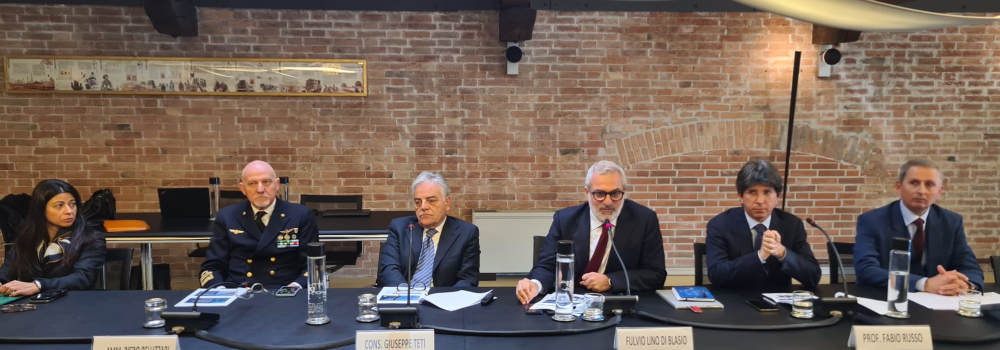
Extraordinary Commissioner Fulvio Lino Di Blasio stated: “Venice must remain the Adriatic’s leading cruise homeport and one of the Mediterranean’s largest tourist ports. The maintenance of the cruise industry’s excellence in other major Adriatic ports depends on its revitalization. To achieve this goal, in addition to completing the projects indicated by the Government by 2026—primarily the Porto Marghera passenger terminal on the northern bank of the North Canal and the associated two berths—we are always working, paying the utmost attention to the exceptional environmental context in which we find ourselves, to enhance the Marittima and reposition the port of Chioggia in synergy with the Venice port. This is a long and carefully planned process that sees us committed to constantly sharing the objectives and actions to be undertaken with all the institutions involved—the national government, the Veneto Region, the Prefecture, the Municipality of Venice and the Municipality of Chioggia and their mayors, Port Authorities, law enforcement agencies, border police, Fire Department, Customs and Monopolies Agency, Interregional Public Works Department, Local Health Authority 3, MABHO—and with Venice Passenger Terminal , the concessionaire of the cruise terminal, shipping agents, the other terminals involved, technical nautical services, and the entire port community in general. We will be able to deliver the first temporary wharf as early as next year on the North Channel and launch important intervention projects to improve nautical accessibility. According to our calculations, by continuing along the path set out in the timetable and with all wharves fully operational, by 2027 we will be able to reach a capacity capable of hosting 1 million cruise passengers, 90% of whom will be “homeport”.
The Maritime Director of the Veneto Region, Admiral Piero Pellizzari, highlighted how the Channeling study will form the basis of the risk analysis, supporting the Maritime Authority’s assessments regarding safe nautical accessibility in the port’s maritime channels. The data resulting from the study will be used to potentially update the current ordinances presently in force, given the need to ensure the greatest possible usability of the port for all types of ships 24 hours a day, also as a means of mitigating the effects caused by the activation of the MoSE system.
In thanking President and Extraordinary Commissioner Fulvio Lino Di Blasio, the President and CEO of ‘Venezia Terminal Passeggeri’, Fabrizio Spagna, emphasized, “There is no doubt that Decree 103/2021 has had clear economic and operational impacts on VTP’s business, which must be considered if we are to discuss the future of the cruise industry in Venice. This future is, therefore, inextricably linked to the construction and availability of infrastructure for the widespread docking areas of Marghera, Fusina, and Chioggia, as well as full nautical accessibility to the port. From a traffic and numbers perspective, this will not be a return to the past, replicating a bygone cruise model. Instead, we have the opportunity to design a new one based on sustainability and seamless integration with the local area, one that will once again serve as an example for the entire world. A new formula that is compatible with the city and the region. Compatible means respectful of the environment and the landscape, and also respectful of the work and professionalism of the people who have made Venice unique as the Mediterranean’s leading homeport, and one that can contribute to the region’s growth with an economy capable of generating quality tourism. In this context it is crucial that the new cruise structure ensures the mooring of ships in home ports, overcoming the so-called “Redentore mode” and is compatible with the city thanks to new development models that are synergic with the tourist offer not only of Venice, but also the entire region. Together with the commissioner’s office and with the government’s support, we aim to work together to develop a shared vision of how to rebuild the cruise industry for Venice and therefore, the services VTP can offer cruise lines to best organize their presence and return to Venice.
Last Update
17 September, 2025